Chios mastic oil in skincare: aroma, origin and realistic expectations
How mastic resin, mastic essential oil and other Pistacia lentiscus oils differ, the aromatic role in skincare, and what to consider.
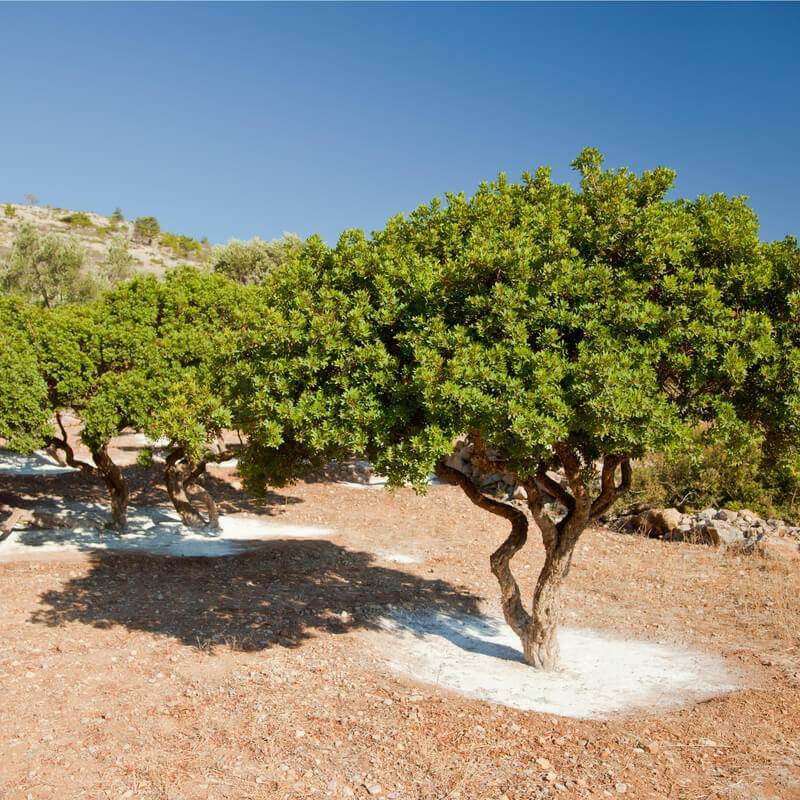
Chios mastic has a distinctive aromatic identity. When it appears in a cosmetic description, however, you need to know which raw material is meant. Resin, an extract and an essential oil are different materials.
What is the difference between resin and mastic oil?
Mastic is the resin of Pistacia lentiscus var. chia. Mastic oil is an aromatic raw material that can be obtained by distilling the resin. Research on mastic distillation examines that process; it is not a test of a balm's performance on human skin.
An extract, a leaf oil or an oil from another part of the plant should not automatically be treated as the resin's essential oil. The precise raw material and its final label declaration matter.
What is its role in a balm?
In cosmetic skincare, an aromatic role can be described. How a scent feels depends on the rest of the formulation and on the person using it. Words such as clean, woody or subtle are not a substitute for assessing the finished product.
Laboratory findings about a raw material should not become promises that every product containing it has a therapeutic effect. Greek origin and a long history of use are not enough to establish a particular skin outcome either.
Natural fragrance is not a guarantee against reactions
DermNet describes contact reactions to essential oils. If you have a known sensitivity to aromatic materials, do not assume a natural fragrance will suit you. Seek individual advice.
External skincare use is different from use in food or a room fragrance. Do not apply undiluted essential oil because a cosmetic description mentions mastic, and do not treat an article as instructions for mixing a homemade formula.
How should you read a related label?
- Look for the full ingredient list rather than just the name on the front.
- Check the directions and intended area of use.
- Do not treat a stronger smell as evidence of greater effectiveness.
- Discuss ingredients with a health professional if you have allergies or ongoing irritation.
Where does PRIMAL CORE stand?
Chios mastic oil is part of the development direction for PRIMAL CORE. The final formulation, concentration, scent and directions have not been finalized. No percentage or final INCI declaration is being announced from a draft.
Frequently asked questions
Is a balm containing mastic oil fragrance-free?
Not on the basis of that description. An aromatic ingredient does not become scent-free because it comes from a natural source. The final label should make the composition clear.
Should I choose it simply because of tradition?
Tradition is part of a material's story. For a personal choice, consider clear information, assessment of the finished product and your own skin's response.
Sources and further reading
- Effect of hydrodistillation with phosphoric acid on the yield of Chios mastic gum essential oil (2010)
- DermNet — Essential oils and contact allergy
Read next
- Dry skin in men during winter: a simple care guide
- Dry hands and rough elbows: practical everyday care
- PRIMAL CORE ingredients: what is known and what is still being finalized
General cosmetic-care information, not diagnosis or treatment. Suitability depends on the finished product and its directions.